



Louvers Window Buying Guide 2026: Glass Louver Windows for Custom Projects
What Are Glass Louver Windows and Why Do Buyers Choose Them?
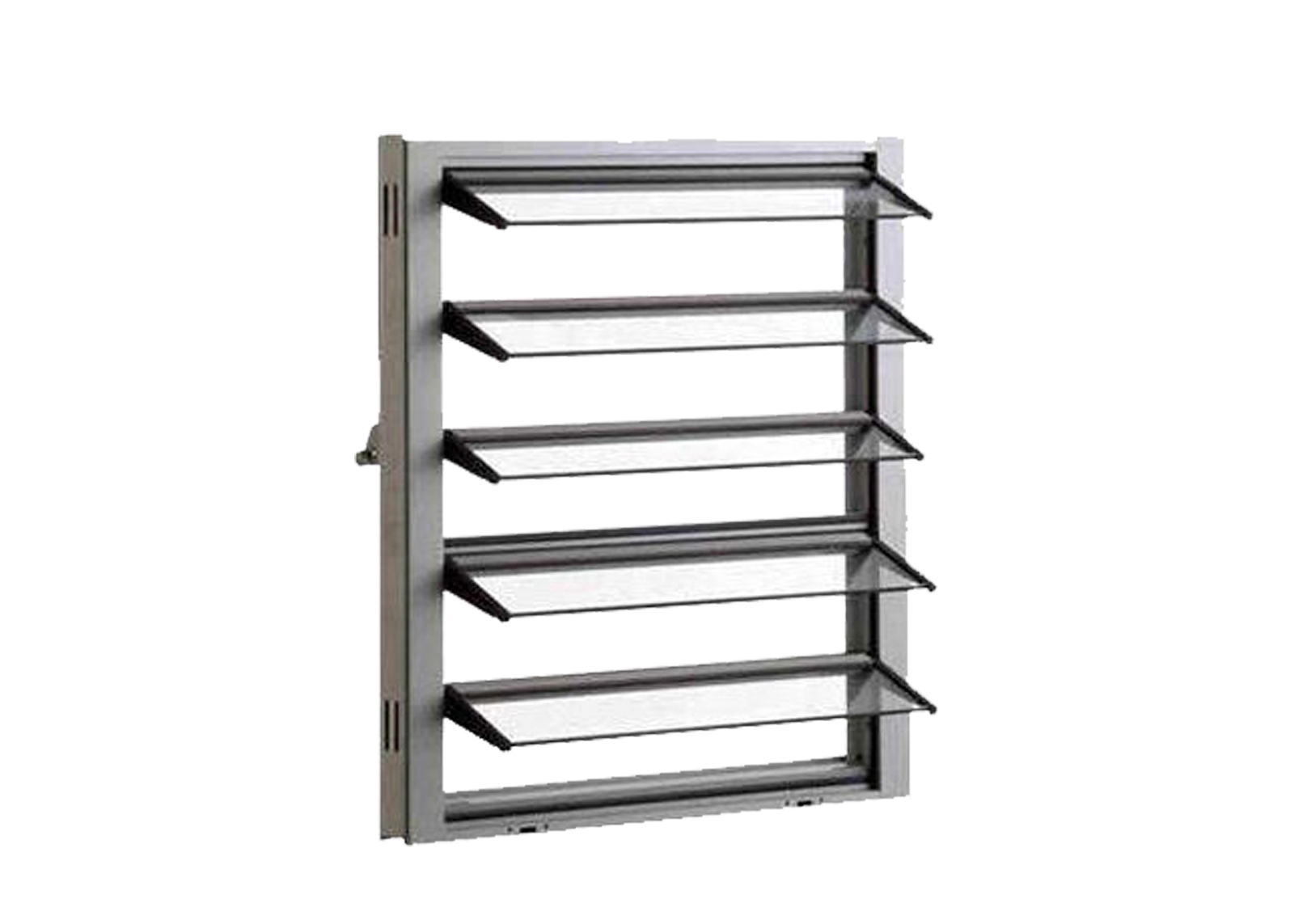
Glass louver windows are frames filled with a stack of angled glass blades instead of a sash, so the opening ventilates continuously while the blades shed rain and cut low sun. ROPO builds them in 6063-T5 aluminium with 6 mm toughened blades, EPDM seals and optional flyscreen or security screen, for coastal, industrial and high-wind projects.
The three parts of a louver window
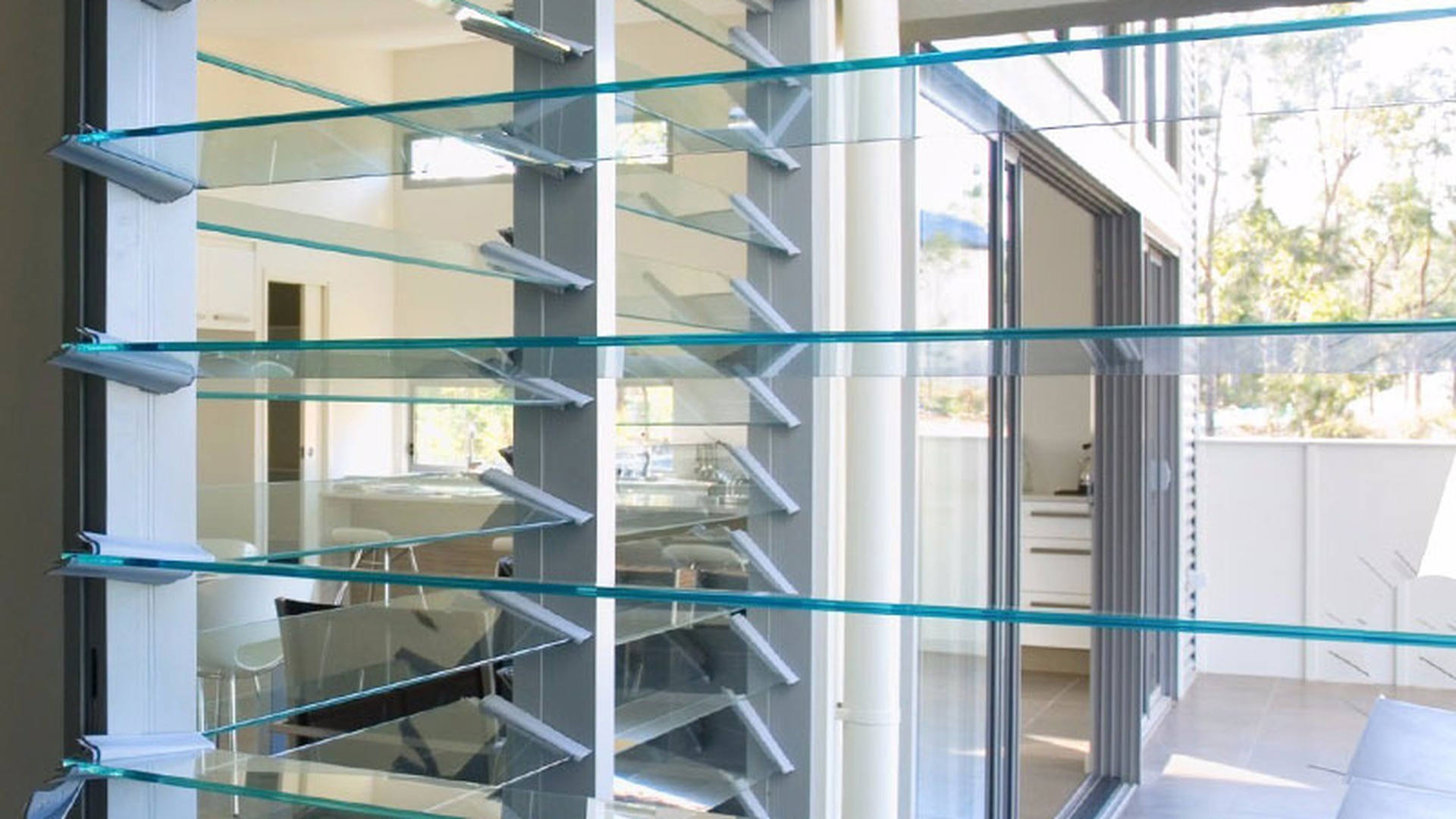
A louver window is easier to specify once you stop thinking of it as a window and start thinking of it as three separate systems that happen to share one opening. The first is the frame: an outer rectangle that carries the whole assembly and takes the wind load back to the wall. The second is the blade stack: a set of glass or metal blades, each held at its two ends, spaced at a fixed pitch, and either locked at one angle or moved together by a control. The third is the closure layer: the seals, the screen, the sill detail and the head flashing that decide whether the assembly keeps water out when the wind drives rain at it horizontally.
Most failed louver projects fail in the third system. The blades are visible and therefore discussed; the seal between blade and frame is invisible and therefore assumed. A louver with a generous blade and a thin seal will leak at the first storm, and no amount of frame quality will compensate, because the water is not coming through the frame — it is coming past the blades.
What a louver does that an opening window cannot
A casement or an awning window ventilates by creating one large opening, and that opening admits rain at the same time as air. Closing it stops both. A louver decouples the two: the blades overlap in section, so air passes around them while water running down each blade is thrown outward at the next blade below. That is why louver windows are the default choice in places where ventilation is needed during rain — stairwells, bathrooms, service risers, generator rooms, plant rooms, car parks, and coastal houses that are closed up for weeks at a time.
The same geometry gives privacy without a blind: at a shallow angle the blades hide the room from a viewer standing below, while the top of the window still lets daylight in. And because no part of the assembly swings into the room or out over a walkway, a louver can be used where a casement sash would foul a corridor, a balcony rail or a neighbouring wall. Where privacy matters but ventilation is not the driver, an integral blind inside a sealed unit is the alternative worth pricing against a louver.
| Project requirement | Glass louver window | Sliding window | Casement or awning window |
|---|---|---|---|
| Ventilation while it rains | Yes — the blade overlap sheds water as air passes | No — the opening admits rain directly | Partly — a small opening angle only |
| Water resistance when closed | Depends on blade pitch and seal; the sill and head details decide it | High, once the sash is closed onto its seal | High, with a compression seal on the sash |
| Privacy without a blind | Built in, by blade angle | None | None |
| Daylight and view | Reduced and striped | Almost unobstructed | Almost unobstructed |
| Cleaning effort | Highest — every blade has two faces and two ends | Low — two panes, one track | Low — one or two sashes |
| How the price is built | Frame + blade number and pitch + carrier + screen | Frame + sash + track and rollers | Frame + sash + hinges and handles |
| Best fit | Stairwells, bathrooms, plant and service rooms, coastal houses | Balconies and terraces where the view is the point | General rooms where full opening is wanted |
Louver, jalousie, shutter: three names that are not interchangeable
Search data shows the same product typed four ways — louver window, louvers window, louvered window and glass louver — and a fifth term, jalousie, which is the older name for the same blade principle applied to a door or a narrow window. The names matter less than the mechanism, but the mismatch causes real problems at quotation. A buyer asking for "jalousie doors" is usually asking for a full-height blade assembly with a lock, not for a window; a buyer asking for "shutters" may mean a roll-down storm shutter that closes over a window, which is a different product with a different test standard.
It is worth writing the term your project uses into the enquiry and adding one line describing the function: ventilation while closed, fixed or adjustable, indoor or outdoor face, and whether a screen is required. That single line removes most of the ambiguity between a louvers window, a jalousie and a storm shutter, and it lets the factory quote the right assembly the first time rather than the second.
Where buyers get the specification wrong
Three errors recur in louver enquiries. The first is treating the window as a size rather than a system: sending a width and height without saying which face is exposed, what the prevailing wind is, or whether the opening must remain open during rain. The second is asking for "glass blades" without stating the safety requirement, which decides whether the blade is toughened, laminated, or toughened and laminated. The third is leaving the screen to the end, when in most projects the screen is the part that determines whether the louver is usable at night in insect season — and the part that changes the frame depth.
Glass Louver vs Louvers Glass Windows: How the Blade System Works
The two phrases buyers type — glass louver and louvers glass — describe the same product from different directions: one names the material of the blade, the other names the assembly. What matters commercially is the blade system behind either phrase, because blade pitch, blade retention and the control method decide airflow, water tightness and price. The glass louver series and the aluminium louver range share that logic, and the section drawings for either are what a buyer should be asking for.
Louvers for Windows: Blade Width, Spacing and Airflow Design
Blade width and blade pitch are usually treated as catalogue constants, and that is where specifications go wrong. On a real project they are a set of trade-offs. A wider blade at a given pitch throws water further out and gives more privacy, but blocks more of the view and needs a deeper frame to sit in. A narrower blade at a tighter pitch gives a cleaner sightline and more even light, but lets more wind-driven rain past at high angle of attack. Opening the pitch increases free area and ventilation, and at the same time reduces the overlap that makes the blade stack water-resistant.
The practical consequence is that blade width and spacing should come from a model schedule for the actual opening, not from a table in a brochure. Ask for the section drawing of the blade stack, the stated free area, and the pitch dimension — then check that the free area is quoted for the pitch you are buying, because a free-area figure from a different pitch is a number without meaning. ROPO publishes the model-specific size schedule and section drawings on request rather than fixing one blade geometry for every project, since the same frame can be built with different blade sets.
Fixed, adjustable and removable blade sets
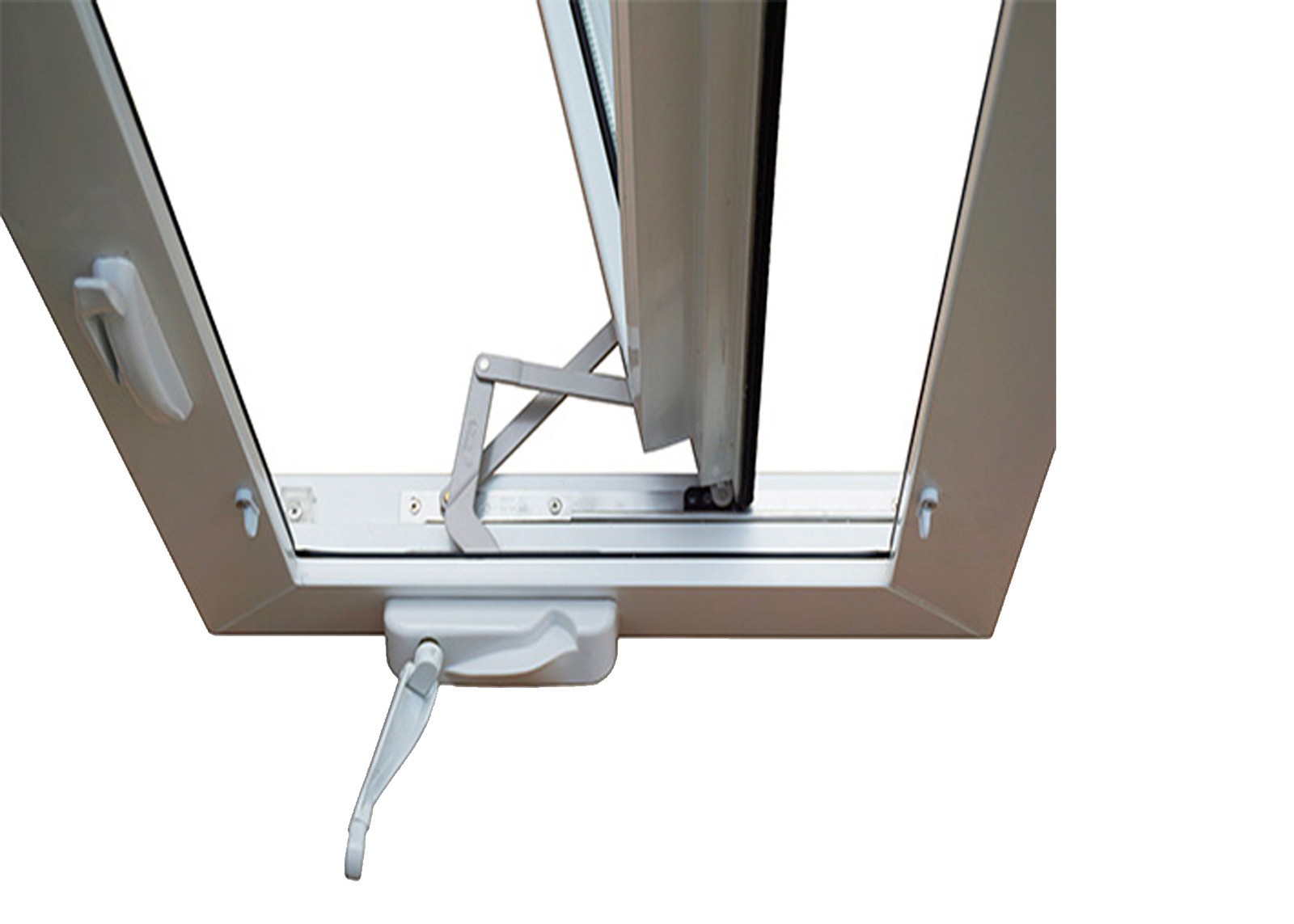
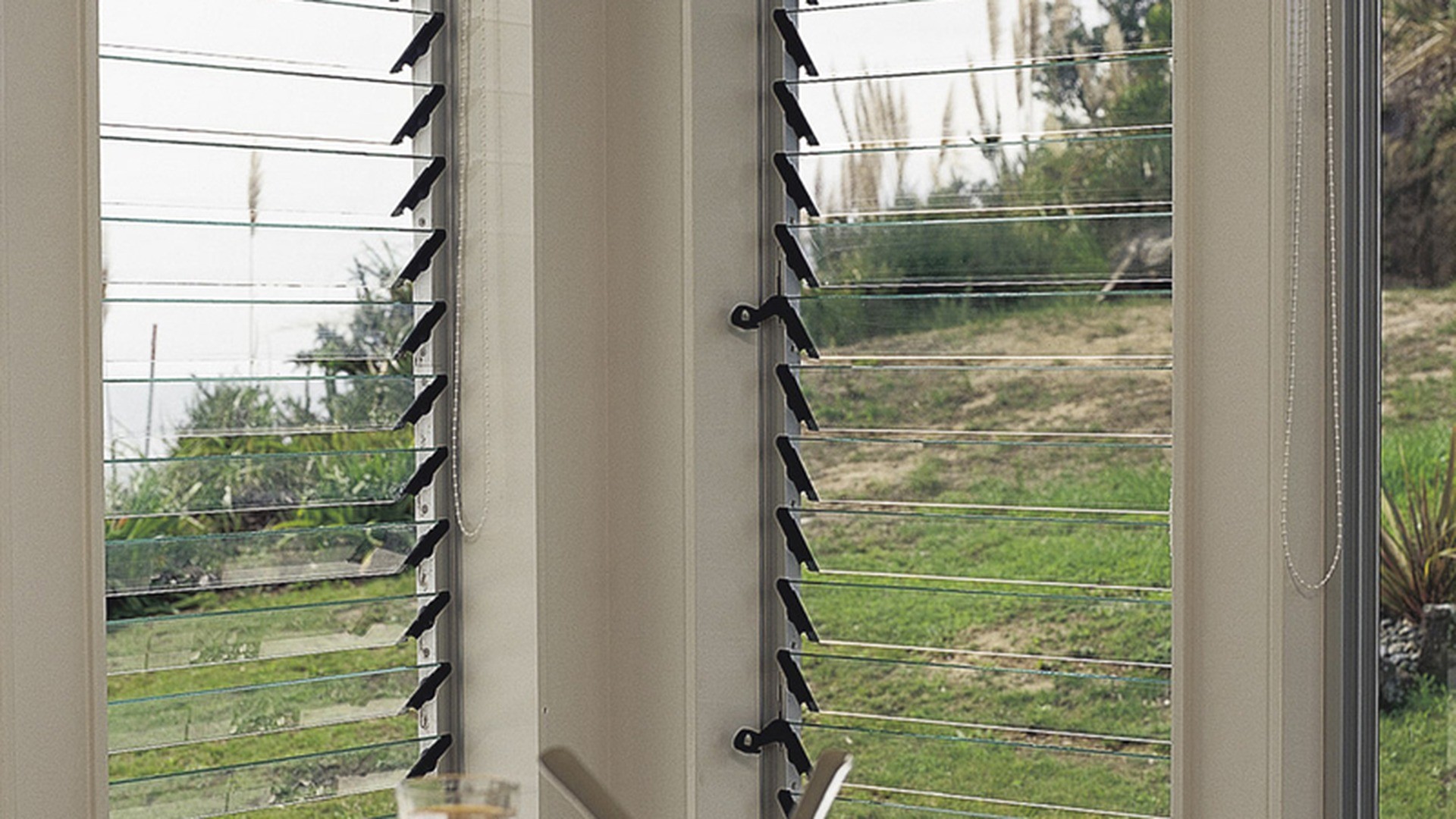
Fixed and adjustable louver windows are priced on the same frame and differ in the control. A fixed louver is the cheapest and the most water-resistant, because nothing moves and every blade can be sealed in place. It is the right choice for plant rooms, screens, car parks and any opening where the airflow requirement is constant and nobody needs to change it. An adjustable louver adds a control — typically a chain, a lever or a manual crank on the jamb — that rotates the whole bank of blades together. It costs more, needs a little maintenance, and gives the owner the ability to shut the window down ahead of a storm or open it fully on a still day.
Removable blade sets sit between the two: the blades are clipped rather than fixed, so a maintenance team can take a bank out to clean a shaft, reach a duct, or replace a damaged blade without removing the frame. On industrial work this is often the deciding feature, because access for cleaning is worth more than the small saving from a fully fixed stack. Whichever type is chosen, the retention method has to be stated: a blade held by a clip at each end behaves differently under wind load from a blade captured in a continuous carrier, and the difference shows up at the ends of the stack, not in the middle.
Pitch, privacy and the neighbour
Blade pitch is also a planning tool, not only a hydraulic one. A tighter pitch with the blades set flat gives an almost continuous surface, which is why louver bands are used to screen a plant room from the street or a bathroom from the next building; open the same blades and the elevation reads as a grille. On a boundary where the neighbour's window looks down into a courtyard, the useful move is often a shallow-pitch louver with a fixed angle rather than a blind inside the glass, because the louver keeps working when the room is occupied and needs no cleaning on the inside face.
The limit is that a shallow fixed angle also cuts daylight, and on a north-facing room that trade is rarely worth it. Ask for the elevation to be drawn with the chosen pitch before the order is released: a section through the blade stack at the real angle tells the buyer more about light and privacy than any photograph of a similar window on another project.
Blade material: glass, aluminium and the edge question
On a louvers window the blade is the part that takes the abuse: it is hit by rain at speed, by wind-borne grit, by cleaning cloths and, on industrial work, by whatever the air stream carries. Glass is chosen where daylight and view matter, and 6 mm toughened is the listed base glazing on the aluminium range because it survives impact and fails safely. Aluminium blades are chosen where the opening is a vent rather than a window, where privacy is the point, or where a glass edge would be at risk from handling and cleaning.
The edge is the detail that separates a good blade from a cheap one. A toughened blade is strong face-on and sensitive at the edge, so the carrier has to hold it without point-loading that edge, and the blade has to sit in a rebate rather than on a clip that grips the face. On the louvers glass window range the blade is seated and gasketed at both ends for the same reason: the seal protects the edge from water sitting against it, and the seat protects it from movement.
Free area, not blade count, is the number to quote
Buyers often specify a louver by counting blades, and factories can build to a count — but the number that decides whether the opening works is free area: the proportion of the frame opening that actually passes air once the blades, their overlap and any screen are accounted for. Two assemblies with the same blade count can differ in free area once the pitch and blade depth change, and adding a flyscreen to either one reduces it again.
For a ventilation duty, state the required airflow or the heat load and let the factory size the opening; for a view or privacy duty, state the sightline and the exposure instead. Where a consultant has already fixed the free area, ask for the figure with the pitch and blade section it was calculated from, because free area quoted without those two is a number that cannot be checked on delivery.
What the carrier, the clip and the seal actually do
The carrier is the part most buyers never see and the part that decides whether the louver stays quiet. Each blade is held at both ends in a shoe or carrier that sets its angle and resists rotation under gust load. If the carrier is a loose clip, the blade will rattle and, over a few seasons, wear the hole it sits in; if it is a continuous extrusion with a gasket, the blade is held along a line rather than at a point and the assembly stays tight.
Behind the carrier sits the seal. On the ROPO louver range the seal material is EPDM, chosen because it holds its recovery in heat and ultraviolet light far longer than a cheap thermoplastic rubber. The seal does two jobs: it closes the gap between blade and frame at the ends, and it gives the blade something to land on when the stack is closed. In a coastal or industrial environment the seal is also the first part to age, which is why the maintenance section below treats seal inspection as a scheduled task rather than a repair.
Louvers Windows for Coastal, Industrial and High-Wind Projects
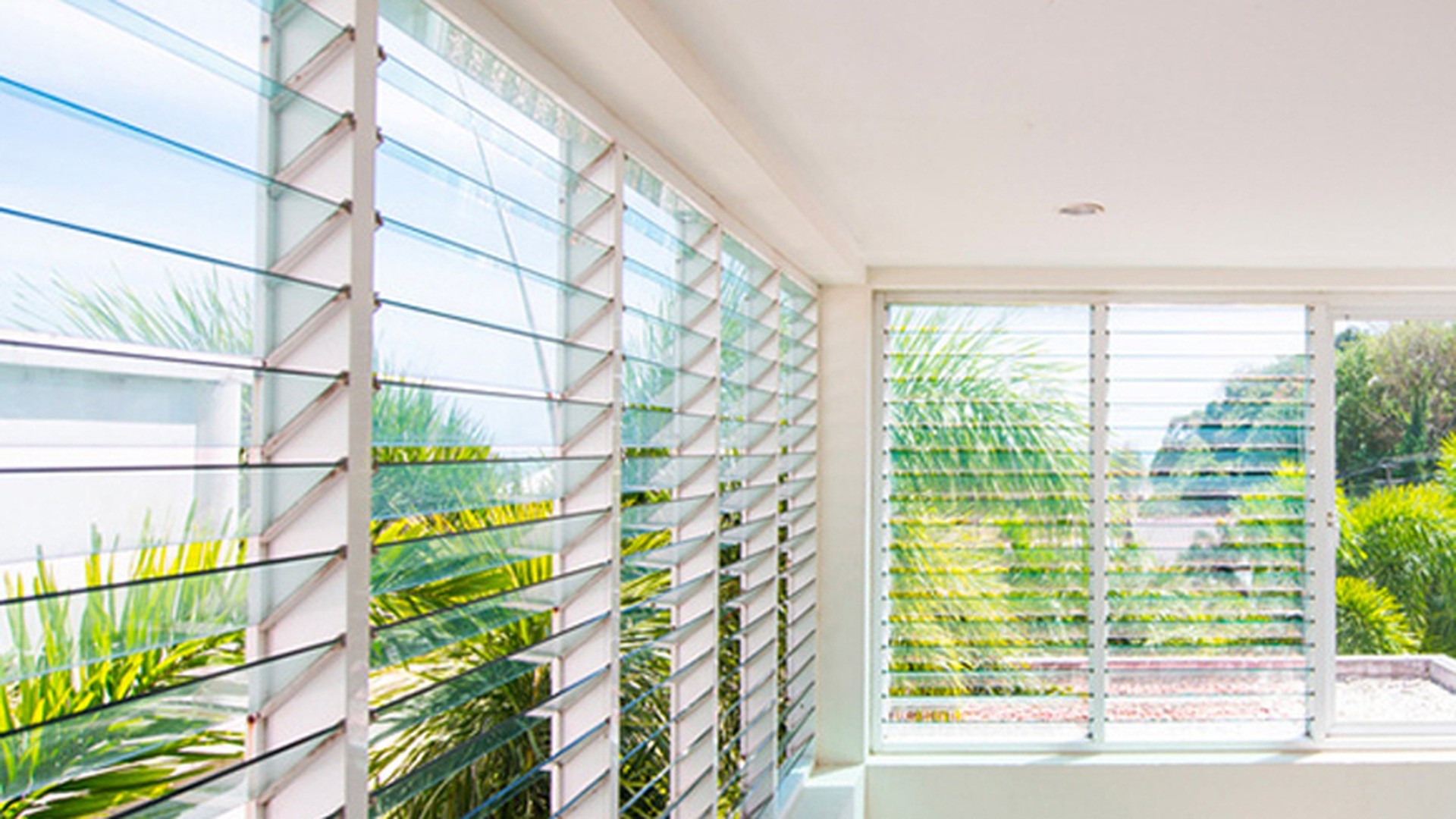
The louver windows range is specified in three quite different contexts, and the same product will not serve all three. A coastal house wants salt resistance and privacy; an industrial building wants free area and access; a high-wind project wants a tested assembly. Read the three sections as three different briefs rather than three grades of the same window.
Coastal projects: salt, driven rain and screens
On a coast the enemy is not the average rain but the wind-driven event, where water arrives almost horizontally and finds any gap that faces the weather. Two details matter more than the blade profile: the sill, which must drain outward and never inward, and the head, which must be flashed so that water running down the wall cannot enter above the frame. Powder-coated aluminium is the normal frame choice for salt exposure, with the coating thickness and pretreatment specified rather than assumed, and stainless or coated fixings used throughout so that the frame is not sacrificed to a corroding screw.
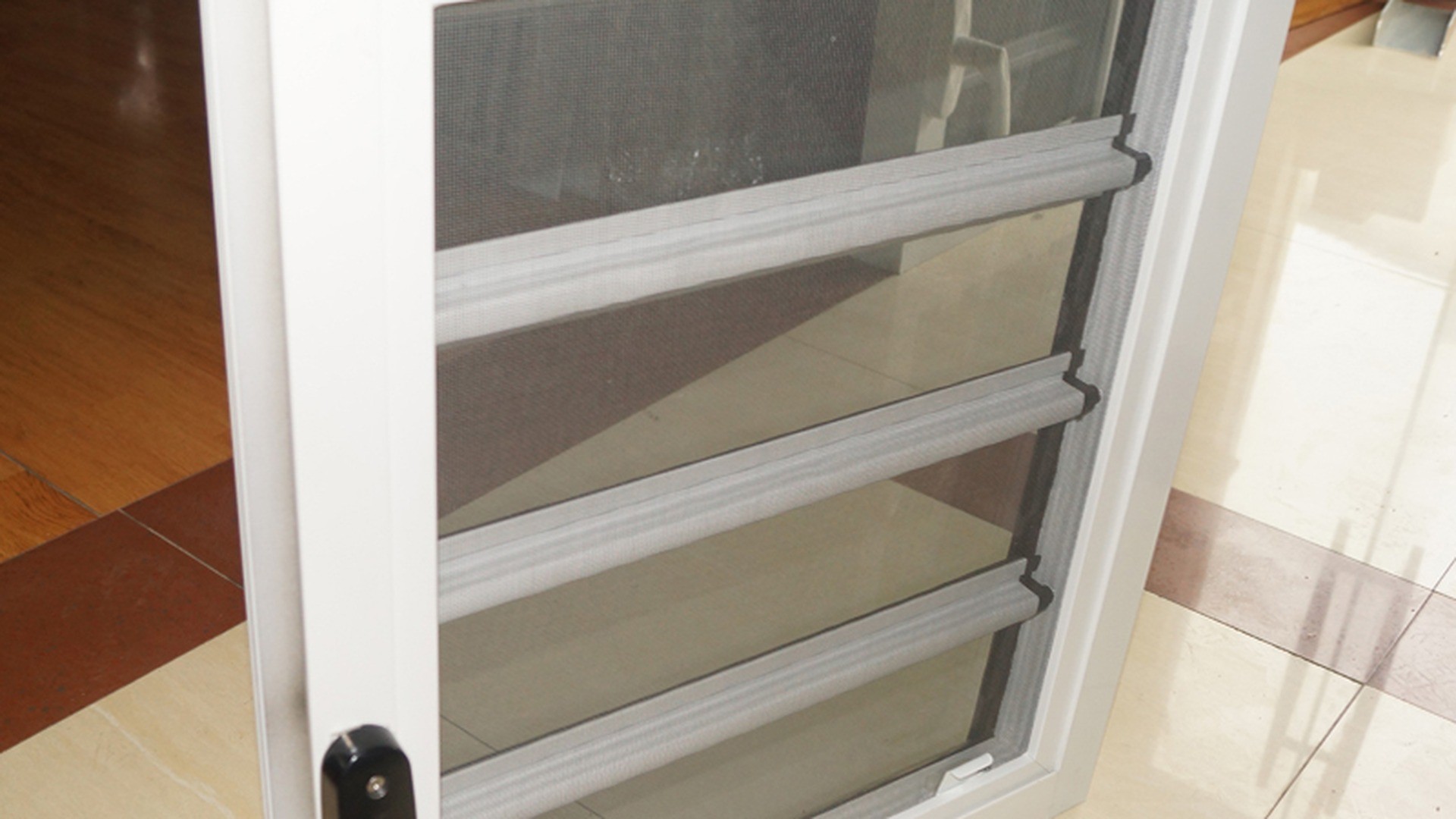
The screen is the other coastal decision. A fixed flyscreen keeps insects out but does nothing for salt; a security screen adds a barrier but reduces free area and changes the cleaning routine. Both are listed options on the aluminium louver windows range and both must be chosen before the frame depth is fixed, because a screen adds a plane in front of the blades — and on a coastal project that plane is also where salt deposits collect first. The trade-off between mesh, retention and glass choice is set out in the security screen and glazing guide.
Industrial ventilation: heat, dust and access
Louvers windows for industrial buildings are specified from the plant schedule rather than the elevation: the opening exists to move air, and its appearance is a by-product. In a plant room, a smelter building or a factory bay, the louver is a ventilation component and should be sized like one. The questions change: what heat load must be removed, what dust is in the air, whether the opening must be cleaned from inside, and whether anything has to pass through it during maintenance. Blade pitch is then set by the required free area rather than by appearance, and a removable blade bank is often worth more than a slightly better U-value, because a stack that cannot be cleaned loses its free area to dust within a couple of seasons.
Heat also changes the material decision. Aluminium blades and frames expand and contract with temperature; on a long industrial louver the fixings and the carrier spacing have to allow for that movement instead of locking it out. Where the air is corrosive as well as hot, blade material and coating become the governing choice, and the frame specification should be read together with the coating system rather than separately.
Stairwells, car parks and service rooms
The most common commercial louver is not a feature window at all: it is the ventilation band in a stairwell, the screen wall of a car park, or the vent in a service room. In these positions the requirements are simple and unforgiving. The opening must stay open, the rain must not come in, the assembly must not be reachable by the public in a way that lets it be tampered with, and cleaning must be possible without scaffolding.
A stairwell louver is usually specified as a fixed bank with a security screen on the accessible face, sized to the free area the stair pressurisation or smoke clearance calculation requires. A car park screen is specified for airflow first and appearance second, with a removable bank so that a pressure-washer can reach behind it. A service room — a generator room, a transformer room, a pump room — adds heat to the brief, and often needs the louver paired with a shutter that can be closed in a storm, which is why the hurricane shutter range is quoted alongside rather than instead.
High-wind and hurricane projects: what the test has to cover
A louver is not automatically a hurricane product. The blades present a large, interrupted face to the wind, and the load path runs from each blade through its carrier into the frame and then into the wall — so the certification has to cover the assembly, at the size and blade configuration being supplied, not just the profile it is made from. Where a project requires Miami-Dade approval or an AS 2047 report, the useful question is not "do you have a certificate" but "which tested size, blade pitch and fixing condition does the report describe, and does my opening fall inside it".
ROPO holds AS 2047 and Miami-Dade approvals for tested window and door assemblies and builds a hurricane impact louver range alongside its standard aluminium louver windows; for any given opening the report reference and the tested configuration are confirmed against the schedule before quotation. On exposed sites the screen frame is part of that discussion, because a screen that fails in the first gust takes the blade stack with it.
Louver Glass, Safety Glazing and Frame Options to Specify
Once the blade system is fixed, the specification moves to glass, frame and the details around the opening. This is the part of the order where a small omission turns into a site problem: the correct blade in the wrong frame depth, or a frame that is right on paper but has nowhere to drain.
Glass Louvers Window Sizing and Installation Checks
Sizing starts with the structural opening, not the frame. Measure the opening in several places, take the smallest width and height, and state which dimension is the reveal and which is the frame — a louver that is made to the largest measurement will not go in. Then confirm the frame depth against the wall: a louver needs enough depth for the blade stack, the carrier and, if specified, the screen plane. On a retrofit into a shallow rendered wall this is the constraint that decides whether the screen is possible at all.
Installation checks are short but not optional. The sill must fall outward, with the drainage path clear and the weep detail unobstructed. The head must be flashed or sealed against the wall, not simply bedded in mastic. The frame must be packed and fixed at the specified centres so that wind load goes into the structure rather than into the frame corners. And the blades must be cycled through their full travel before handover, because a carrier that binds shows up in the first ten movements, not in the first ten months.
Frame options: aluminium, uPVC and finish
The louver range is built mainly in aluminium: 6063-T5 alloy, non-thermally broken on the standard louver profile, with a listed profile thickness of 1.60 mm and a powder-coated finish. That combination suits ventilation openings, where the frame is short in height and the thermal penalty of a non-broken profile is small compared with the free area gained. Where a project needs a thermally broken frame — a conditioned space with a large louver face — that is a different profile and should be quoted as such rather than assumed from the standard range.
A uPVC louver series is also available for projects that standardise on plastic frames, and the two should not be treated as interchangeable: the aluminium range carries the longer spans and the hurricane-tested variants, while the uPVC range follows the colour and reinforcement logic of the rest of the uPVC system. Frame finish is powder coat as standard, with other listed finishes subject to confirmation, and the colour should be fixed at order stage because a louver is visible from both sides and a late colour change affects the whole frame, not a trim.
| Item | Published listing information |
|---|---|
| Frame material | 6063-T5 aluminium; non-thermally broken on the standard louver profile |
| Listed profile thickness | 1.60 mm |
| Listed base glazing | 6 mm toughened glass |
| Seal material | EPDM |
| Frame finish | Powder coat; other listed finish options subject to confirmation |
| Screen options | Fixed flyscreen and security screen options; confirm the selected system |
| Blade geometry | Model-specific size schedule and section drawings on request |
Writing an RFQ a factory can price
Every louvers window enquiry that comes back with a wide price spread has the same cause: the enquiries were not the same scope. A factory cannot price a blade pitch it has not been given, a screen it has not been told about, or a wind pressure for a site it cannot see. The list below is the minimum that turns a question into a quotation, and it is short enough to fill in from a drawing set.
- Opening schedule with width, height and sill height, and the wall or reveal dimension the frame has to fit.
- Exposure: the face of the building, the wind pressure or the site's design gust, and whether the opening must stay open during rain.
- Function: fixed, adjustable or removable blades, and the control type if adjustable.
- Blade and glass: glass or aluminium blades, glazing build-up, and the safety requirement if the opening is above a walkway or a low sill.
- Screen: none, fixed flyscreen or security screen, and which face it sits on.
- Finish and colour: powder coat reference, and whether the colour must match an existing facade.
- Certification: the standard the project has to meet and the report reference if one has already been accepted.
- Logistics: destination port, Incoterm, required-on-site date and any crate or marking requirement.
Send that as one document rather than as a chat thread. It is also the document the factory will quote against and the inspector will check against, so it saves a second round later in the order — and on a project with several hundred openings it is the difference between one production run and three.
Safety glazing and blade retention
The glass in a louvers glass window is usually discussed only as thickness, but the coating and the cavity decide how the opening behaves in service. A single 6 mm blade has no cavity to fill, so its thermal performance is set by the glass itself; where a louver sits in a conditioned space the specification may move to a laminated build for safety rather than to a coated build for insulation, because the air is moving through the opening anyway. Where the same elevation mixes louver bands with fixed glazing, the fixed units carry the insulation duty and the louver carries the ventilation duty — the two should not be specified to the same glass build-up. The options and the performance trade-offs are set out in the glass options reference and, for the sealed units beside a louver, in the triple glazing guide.
Blades are glass in the standard build: 6 mm toughened is the listed base glazing, which gives the impact resistance a ventilation opening needs and breaks into small particles rather than shards if it does fail. Where the louver sits above a walkway, a balcony, a playground or a low sill, the glazing requirement should be checked as a safety glazing question and not only as a wind-load question; on some projects that means laminated, or toughened and laminated, and the blade thickness then changes the carrier and the frame depth.
Retention is the other half. A toughened blade is strong in the plane and vulnerable at the edge, so the carrier must hold the blade without point-loading the glass edge, and the end clearances must allow for thermal movement. Ask for the retention detail in section: if the answer is a clip that presses on the glass face, the design is relying on friction rather than on a seated edge, and that is the detail that decides whether the stack survives a decade of gusts.
Window Louvers Glass Maintenance, Cleaning and Long-Term Performance
A louver window is a maintenance product by design: it has more edges, more seals and more surfaces than a fixed window, and it earns its keep only if those surfaces are cleaned on a schedule. The good news is that the routine is short and can be done from inside on most residential units.
Cleaning sequence that does not damage the seals
Start at the top blade and work down, because dirt washed off an upper blade lands on the one below. Close the blades first so that each is supported, wipe with a soft cloth and a mild detergent, and rinse rather than scrub — abrasive pads cloud the glass edge and wear the EPDM. On a coastal site, fresh water rinsing after a salt event matters more than any cleaning product, and it should be done before the salt dries into the seal line. Never use a pressure washer directly on the blade ends or the carrier; the seals are designed for rain, not for a jet.
Hardware, screen and seal checks
Once a season, cycle the control through its full travel and listen: a creak means the carrier or the linkage needs attention, and a blade that has lost its alignment means a shoe has worn. Check the screen for tears at the frame edge, where the mesh is clamped and where a small tear becomes a large one. Check the seal line by running a finger along the blade ends — a seal that has gone hard or has shrunk back leaves a gap you can feel before you can see it. On industrial units, add the blade bank removal and cleaning to the maintenance schedule, because free area lost to dust is the most common cause of a louver "not working" years after installation.
Spare blades, seals and the parts list
A louvers window that has been in service for a decade will usually need seals before it needs blades, and blades before it needs a frame. That order is worth planning for at order stage, because the parts that fail are small, cheap and specific: the seal gasket, the carrier shoe, the blade itself if it is damaged by impact, and the control chain or linkage on an adjustable unit. A project that orders a small spares allowance with the first batch avoids the situation where a single damaged blade grounds a whole elevation while a replacement is manufactured and shipped.
Ask for the parts list against the model, not against the range, and ask which of those parts are field-replaceable without removing the frame. On an industrial installation the answer often decides the maintenance strategy; on a residential one it decides whether a homeowner can fix a rattle with a screwdriver or has to call a contractor. ROPO supplies spares against the original schedule so that a replacement blade matches the pitch and the carrier of the unit already installed.
What shortens the life of a louver
Four things: a sill that drains inward, a seal that is allowed to harden, fixings that are not suited to the environment, and a coating that was specified by colour rather than by exposure. A louver with an inward-draining sill will corrode from the bottom up no matter how good the blades are. One with stainless fixings and a proper powder coat will still be serviceable long after a cheaper unit has been replaced. ROPO's warranty terms are published on the warranty list, and they assume the maintenance routine above rather than replace it; the maintenance guide covers the same routine for frames, hardware and seals across the range.
About ROPO Windows
ROPO is a custom window and door manufacturer based in Fuzhou, China, supplying aluminium and uPVC windows and doors to importers, contractors and project buyers in more than 100 countries. The company has been building windows and doors for 16 years, works to AS 2047, NZS 4211 and Miami-Dade requirements, and backs its products with a 10-year warranty. Louver windows sit inside the aluminium window range rather than beside it, which is why the blade stack, the frame and the screen are quoted as one assembly; the factory profile sets out the plant, the lines and the inspection stages behind that quote.
Where the louver range sits
The aluminium louver family covers fixed and adjustable louver windows, the glass louver series built on 6 mm toughened blades, and a hurricane impact louver variant for exposed sites; the uPVC louver series serves projects that standardise on plastic frames. All of them share the same ordering logic: the opening schedule and the exposure conditions come first, the blade geometry follows, and the screen and finish are fixed before production. Buyers who want to compare louver windows against casement, awning, sliding or fixed units can start from the windows overview, or from the full product list when the project mixes several types.
What a factory-direct order does and does not remove
Because the louver, the fixed glazing and the opening windows on one elevation usually come from the same factory, the interfaces can be settled once: the same frame depth, the same colour batch and the same fixing detail across the whole facade. That is worth more on a coastal project than a marginal saving on one line item, because the water that gets past a louver band and the water that gets past a fixed unit are the same water, and the details that stop it are shared.
Buying direct removes the importer margin and the hand-off between trader and factory; it does not remove the need for a clear brief. A louver quote is only as good as the opening schedule behind it, so the fastest route to a usable price is a drawing with dimensions, the exposure of each face, the required free area or airflow duty, the screen requirement and the destination port. Everything else — blade geometry, carrier, seal, coating and packing — can be settled by the factory against that brief, and the assumptions should come back to the buyer in writing before the order is placed.
Custom Production Process
Louver production follows the same route as the rest of the custom range, with one addition: the blade stack is assembled and cycled before packing, because a carrier that binds cannot be fixed on site. The process below is the one used in the Fuzhou factory and applies equally to a one-unit sample and a project batch.
Drawing review and blade schedule
Production starts from the opening schedule and the elevation, not from a stock size. The engineering review fixes the frame depth against the wall, the blade pitch against the free-area requirement, the screen plane, and the fixing condition. Anything that cannot be built as drawn is raised before cutting, which is the point where a change is cheap; the same change after extrusion is scrap. Every louvers window is released to production only once that review is signed off, and the released drawing travels with the batch so that the line, the inspector and the buyer are working from the same document.
Where a project has not built this type before, the first unit doubles as a prototype: the frame and blade stack are made to the schedule, assembled, cycled and photographed against a dimension sheet before the rest of the batch is released. That is the cheapest way to settle a blade pitch or a screen position, and it is why the minimum order is one unit rather than a container.
Cutting, assembly and cycling
Profiles are cut and machined to the released schedule, the frame is assembled and squared, and the blade carriers are set to the pitch on the drawing. The blade bank is then loaded and cycled through its full travel — the step that separates a louver line from a window line. Seals are fitted, the screen is installed where specified, and the assembly goes to inspection with its schedule attached.
Five-step quality inspection
Quality control runs in five steps: incoming material check, in-process check at frame assembly, blade and carrier check, finished-goods inspection against the schedule, and a pre-packing check after the hardware and screen are fitted. Dimensions, blade travel, seal fit, finish and hardware are recorded at each stage, and the record travels with the order so that a question raised after delivery can be answered from the file rather than from memory. The certificates behind those records sit on the quality and certification page.
Packaging and Shipping
A louver travels worse than a fixed window, because the blade stack is a line of glass edges with air between them. Packing therefore protects the frame corners, the blade ends and the screen, and the method is fixed before the container is planned rather than improvised at loading.
Packing method
Units are wrapped and corner-protected, stacked with the blade stack vertical where the crate allows, and separated so that no blade bears the weight of the unit above. Screens and loose hardware are packed separately and labelled against the opening schedule. The packing standard is documented in the packaging guide, and buyers who need a specific crate format or marking for their own warehouse should state it at order stage.
Ports, documents and inspection
A louvers window is packed with the blades closed and locked, so that the stack travels as one rigid block rather than as a set of loose edges, and the crate is braced against the frame rather than against the blades. Loading follows the schedule: the units are grouped by elevation and marked so that the site can unpack in installation order, which matters on a project where the louver bands are fixed before the facade above them is closed.
Shipments leave from Fuzhou or Xiamen, with the port and Incoterm agreed at quotation. Trade Assurance is available for orders placed through the platform, and inspection before shipment can be arranged against the same schedule used in production so that the inspector checks the agreed dimensions rather than a generic checklist. For first orders, the import guide covers the documents and the sequence from deposit to delivery.
Custom Glass Louvers from ROPO: Samples, MOQ and Lead Time
Custom louver orders start at one unit, which is the practical way to approve a blade pitch, a screen and a colour before a project batch is released. The sample is built to the same schedule as the batch, so what is approved is what is produced; where a project has a mock-up requirement, the sample unit can serve as the mock-up record, photographed against the dimension sheet and kept for comparison at delivery.
Approval usually turns on three things the drawings cannot show: how much light survives the blade stack at the chosen pitch, how the screen reads from inside, and how the colour behaves against the facade at the actual orientation. All three are settleable in one sample review, and all three are expensive to change after extrusion, which is why the sample stage is worth the freight even on a modest project.
The questions below are the ones that come back most often from importers and contractors; the answers are the ones that apply to the current range, and any project-specific figure is confirmed against the schedule rather than assumed.Will a louver window leak in driving rain?
Not if the blade overlap, the seal and the sill are right. A louver is designed to shed water while it ventilates, and it does that by throwing water outward at each blade rather than by sealing the opening. Leaks come from three places: a sill that drains inward, a seal that has hardened, or a blade pitch chosen for view rather than for exposure. On an exposed site, specify the assembly for the wind-driven rain case and check the sill detail in section.
Are louver windows suitable for high-rise buildings?
They can be, with the right assembly and fixing. Wind load rises with height, and the load path runs through the blade carriers into the frame, so the frame, the carrier spacing and the anchorage all have to be designed for the pressure at that level. Where the project requires a tested assembly, the report must cover the size and configuration being supplied. Above a certain height the practical constraint is often maintenance access rather than strength.
How is a custom louver window priced?
Price follows the opening, the blade system and the closure layer. Larger openings and wider spans need more frame and more carrier; adjustable or removable blade banks cost more than fixed; laminated or toughened-laminated blades cost more than 6 mm toughened; screens, powder-coat colours and hurricane-tested configurations each add a line. The fastest way to a comparable number is to send one schedule with dimensions, exposure, screen and destination, so that every supplier prices the same scope.
Can louver blades be glass in one project and aluminium in another?
Yes, and the choice should be made on function. Glass blades give daylight and a view while they ventilate, and are the normal choice for residential and coastal work; aluminium blades are used where privacy or robustness matters more than light, and on industrial openings where a glass edge would be at risk. Both sit in the same frame family, so the decision can be made per elevation rather than per building.
What is the minimum order and how long does production take?
The minimum order is one unit, which covers samples and single-opening replacements. Production time depends on the blade system, the screen, the finish and the quantity in the batch, and is confirmed with the order acknowledgement rather than quoted as a general figure — a louver with a tested configuration and a custom colour has a different route through the factory from a standard unit. Buyers working to a site programme should give the required-on-site date at enquiry stage so that the batch can be planned backwards from it.
To move from this guide to a quotation, send the opening schedule, the exposure of each face, the screen and finish requirement, and the destination port. The louver range, the glass louver windows with 6 mm toughened blades and the hurricane impact louver variant are all built in the same factory, so a mixed enquiry can be quoted as one package. For projects that also need fixed, casement, awning or sliding units, the casement guide and the window type comparison show where each one fits, and the brochure download carries the full range with the section drawings.
Ready to specify? Send your schedule through the enquiry form or contact the team directly; a one-unit sample can be produced before the project batch is released, and the model-specific size schedule and section drawings are available on request. Distributors ordering across several projects can also review the dealer programme before the first batch is placed.
