



Top 5 Glass Railing and Balustrade Manufacturers for Commercial Projects
Which Glass Balustrade Manufacturers Should You Shortlist for Commercial Projects?
The glass balustrade manufacturers we shortlist for commercial projects are ROPO Windows, Q-railing, C.R. Laurence, SADEV and Faraone. Each of the five supplies a complete system — glass, fixings, edge treatment and the interface with the slab, stringer or deck — rather than loose panels, which is the minimum for an installation that has to be inspected and signed off.
A balustrade is a safety system, not a sheet of glass
A balustrade is the one element on a building that exists to stop a person falling, and it is judged on that alone. That changes what you are buying. A window is assessed on how it performs in a wall; a balustrade is assessed on what happens when a body, a trolley or a gust of wind loads the top edge, and on whether the assembly still holds after that load is removed. The glass is the visible part, but it is never the whole system: the panel is only as good as the shoe, spigot or standoff that grips it, the anchors that fix that fitting to the structure, and the substrate that receives the anchors. Four components, one load path — and the load path is what the manufacturer is actually selling you.
This is why buying panels to a drawing and sourcing the fittings separately is the most common way a commercial balustrade fails an inspection. The glass may be correct, the fittings may be correct, and the assembly is still unverified, because nobody has tested that combination or calculated that joint. On a factory-direct order the same party owns the glass, the hardware, the fixing schedule and the packing list, so there is one party to answer when the inspector asks which tested configuration was installed.
Commercial means loads, codes and sign-off, not a larger balcony
The word commercial does three things to a balustrade specification. It raises the consequence of failure, because the balustrade now protects the public, tenants or hotel guests rather than one household. It adds a third party to the process, because a building surveyor, certifier or facade consultant has to accept the installation before handover. And it usually adds a substrate problem, because commercial balconies and staircases are concrete slab edges, steel stringers or structural steel rather than the timber deck a residential supplier is used to.
None of that is solved by a thicker panel. It is solved by documents: a tested system configuration that matches the one being installed, a fixing detail that suits the substrate actually on site, and a calculation or test report that covers the height, the glass build-up and the fixing spacing used. A supplier who cannot produce those three things for your project is not a commercial supplier, whatever the product photographs suggest. The same discipline applies to the window and door package on the same building, which is why we treat the facade and the guard as one procurement conversation whenever the project allows it.
What this guide covers, and what belongs on other pages
This page is a sourcing guide: which glass balustrade manufacturers to shortlist for commercial work, how the five main system types differ, and what to verify before you raise a purchase order. The product families that sit beside the balustrade are documented separately — staircase work on the glass staircase railings page, pool surrounds on the glass pool railings page, and the full family on the custom glass railings range.
Two adjacent subjects are deliberately left to their own pages. The glass itself — build-up, coatings, interlayers and how a laminated pane behaves after breakage — is covered in choosing the right glass, in laminated glass for safety and in toughened glass, with the material terms defined on the glass options page. Security hardware on the opening behind the balustrade belongs to window and door security, and the fittings themselves are listed on the hardware page. What follows does not restate any of them.
The Five Glass Balustrade Manufacturers, Ranked for Commercial Work
The five names below are the ones that come up once a guard is being bought as a system with documents rather than as a quantity of glass. Four are established railing and glass-fixing houses whose published ranges are organised around balustrade systems and their fittings; one is a factory-direct manufacturer that takes a balustrade from a drawing through glass preparation, hardware assembly, inspection and export packing under one roof. Together they cover the two routes a commercial buyer actually has: buy a proprietary system through its distribution network, or buy a factory-direct system built to the project drawing.
Two things about this list before you read it. First, the order is our judgement of fit for one specific job — balustrades procured for a commercial building, a hospitality project or an import programme where sign-off matters — and it is not a ranking of size, quality or market position; a company lower down the list may be a far larger business than one above it. Second, we publish no capacity, revenue, staff or export figures for any company named here, including ourselves, because figures of that kind cannot be checked from outside the company. What follows is public, verifiable description, plus the one or two things worth verifying with each.
1. ROPO Windows (China) — the factory-direct balustrade and window manufacturer
ROPO is an in-house door and window factory in Fuzhou, Fujian Province, China, that also builds glass balustrades, pool railings and staircase railings as part of the same glass and aluminium operation. The position matters on a guard for the same reason it matters on a window: the glass, the fittings, the finish and the packing list are controlled by one party, and the balustrade can be coordinated with the facade the same project is buying at the same time. On a building where the balustrade sits directly against a window or door frame, that coordination is not cosmetic — the colour schedule, the fixing positions and the delivery sequence all have to agree.
The guard products sit in the glass railing range alongside the frameless glass balustrade systems used on balconies and stairs, with the pool side covered by frameless glass pool fencing with stainless spigots and the balcony side by a frameless balcony balustrade with duplex hardware. What to verify with ROPO, or with any factory claiming this position: which operations are genuinely in-house and which are subcontracted, who signs the inspection report on your order, and which test or calculation evidence is attached to the balustrade rather than to the window.
2. Q-railing (Germany) — the railing system house
Q-railing is a German railing system provider headquartered in Emmerich am Rhein, and its published range is organised around named balustrade systems rather than individual parts. The glass guard family is marketed as Easy Glass and includes distinct models — Smart, Pro and Strong among them — each with its own fixing principle and its own published installation logic, supported by handrails, glass clamps and brackets from the same catalogue. For a commercial buyer this structure is the point: a named system with published components is easier to specify, easier to schedule and easier to defend in a submittal than a set of parts assembled by a fabricator.
The trade-off is the route to market. System houses of this type sell through distributors and approved fabricators, so the entity that answers your questions may be a reseller, and the installation is done by a third party working to the system manual. Verify with Q-railing or its local partner: which system model is being quoted for your substrate, whether the fixing detail in the quote matches the published manual, and who holds the installation responsibility when the substrate is not as drawn.
3. C.R. Laurence (United States) — the architectural glass hardware supplier
C.R. Laurence, usually shortened to CRL, is a United States supplier of architectural metals, glass fittings and glazing supplies, with glass railing systems, aluminium railing systems and standoff and post systems listed among its product families. Its strength for a commercial project is breadth and availability: the catalogue covers the fittings, the adhesives, the tools and the accessories around the guard, which is useful when a project needs a replacement component or a compatible part years after handover, and it publishes catalogue literature rather than relying on a single system story.
That breadth also defines what to verify. A catalogue of components is not the same as a tested assembly, so the questions move to configuration: which published system the specified combination corresponds to, what the fixing spacing and edge distance are for that configuration, and which documentation is supplied with the order rather than available on request. For buyers outside North America, confirm the distribution route and the documentation set that travels with an export order.
4. SADEV (France) — the stainless steel glass fitting manufacturer
SADEV is a French manufacturer of stainless steel precision components for architectural glass, publicly founded in 1938, whose product lines include the SABCO balustrade range and the SWIMSIDE pool range. Its published positioning is a manufacturer rather than a reseller: standard parts off the catalogue, plus the study and manufacture of custom parts for specific projects. That combination is relevant on commercial work where the standard spigot does not fit the slab edge, the curve or the fall line, and where a made-to-drawing fitting is the difference between a compliant detail and a compromise.
SADEV's fittings are published in stainless steel, which is why the brand appears so often on coastal and pool projects, where the fixing corrodes long before the glass fails. Verify with SADEV or its national distributor: the material grade specified for your exposure, whether the balustrade model quoted is a catalogue assembly or a project-specific one, and what installation documentation is provided for the fixing set actually shipped.
5. Faraone (Italy) — the glass balustrade and facade specialist
Faraone is an Italian company whose published range covers glass balustrade systems and glass railings for interior and exterior use on balconies, terraces, steps, staircases and fences, alongside point-fixed facades, canopies and glass partitions. The useful characteristic for a commercial project is that the balustrade sits inside a wider glass-construction practice, so the same supplier can be asked about the guard and the point-fixed glazing above it, and about how the two fixings interact at the slab edge.
That overlap is also where the questions should concentrate. Where a company supplies both facades and guards, confirm which scope the quotation covers, whether the balustrade fixing is coordinated with the facade bracket set, and who is responsible for the waterproofing and the movement joint at the interface. For buyers importing into a market with its own approval regime, ask early which local test or certification evidence the system can be supplied with.
How to use this list
Shortlist two of the five, not five. Pick the route first — proprietary system through a distributor, or factory-direct system built to your drawing — because the two routes carry different risk, different lead-time logic and different documentation. Then compare the two candidates on the same four questions: the tested configuration, the fixing detail for your substrate, the corrosion specification for your exposure, and the person who signs the inspection report. A comparison run that way produces a decision in one meeting; a comparison run on price per square metre produces a change order later. The same discipline applies to any glass balustrade manufacturers list, this one included.
What Makes a Glass Balustrade a Commercial Product
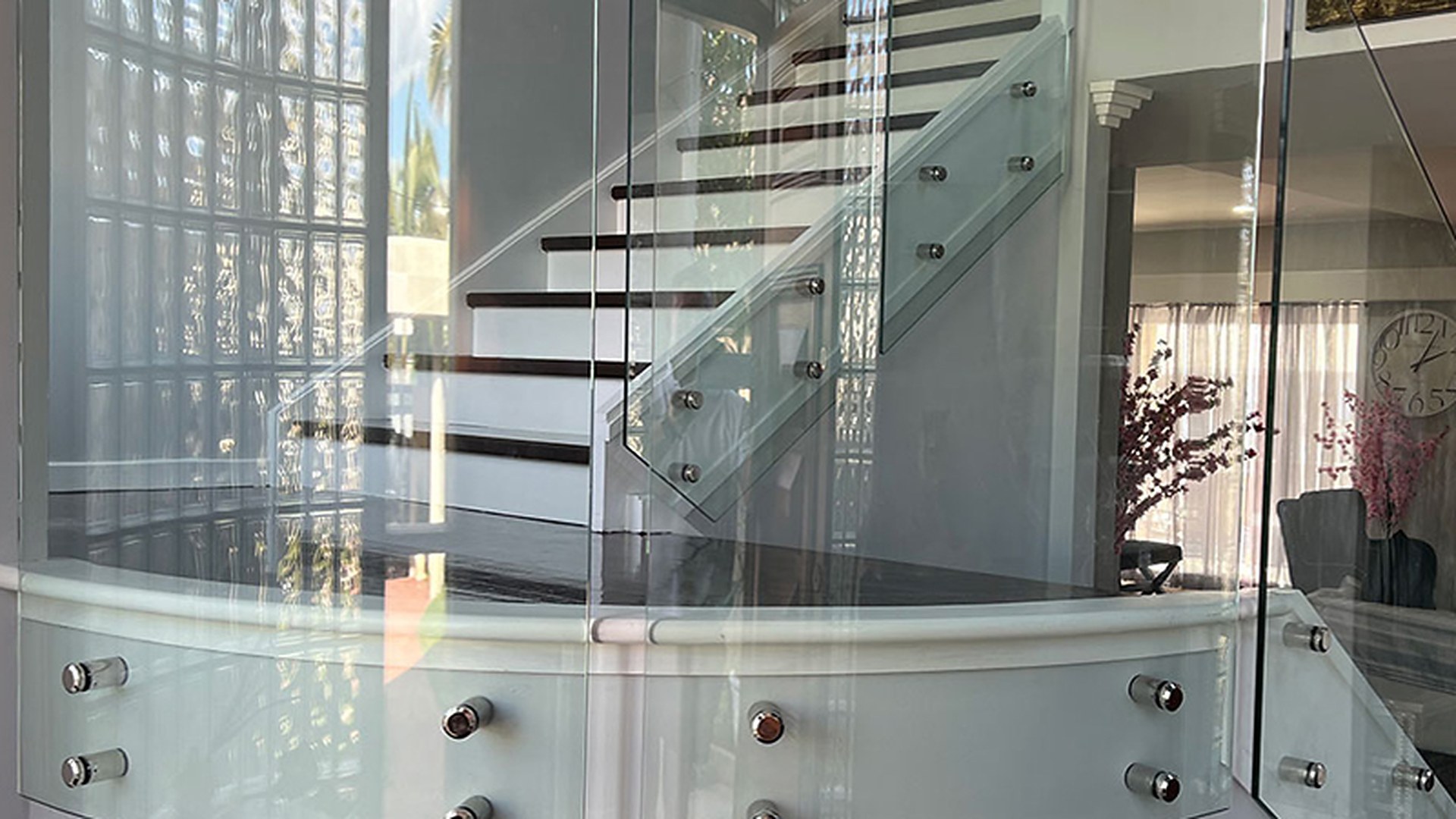
The difference between a residential guard and a commercial one is not the panel size. It is whether the assembly can be shown to resist a defined load, at a defined height, on a defined substrate, with a defined fixing — and whether the manufacturer will put that in writing. Four technical decisions carry almost all of that weight, and a fifth decides whether the assembly survives the site. They are also where glass balustrade manufacturers differ most sharply, because every one of those decisions has already been made by the supplier before your enquiry arrives.
The glass build-up decides what happens after it breaks
Guard glass is specified for two different states: intact and broken. Toughened glass carries the load well while intact and breaks into small fragments when it fails; laminated glass holds the fragments in place through the interlayer, which is why laminated build-ups appear where the guard sits over an occupied space, a walkway or a drop. Some specifications call for both properties in one build-up, and some call for a heat-soaked toughened product to reduce the risk of spontaneous breakage from inclusions. The point for a buyer is that these are specification decisions with consequences, made against the project requirements — not a supplier preference to be settled by what happens to be in stock.
The fixing decides whether it is a system at all
Every balustrade fixing family loads the glass differently. A base shoe or channel grips the panel along its bottom edge and converts the guard into a cantilever, so the glass, the grout or gasket inside the shoe and the anchors into the slab all share the load. Standoffs and point fixings hold the panel at discrete holes, which concentrates stress at the hole and puts the edge distance under scrutiny. Spigots do the same from below, with the additional question of how the spigot is anchored and how it drains. Post systems take the load in the posts and treat the glass as infill, which changes both the structural calculation and the visual result. None of these is universally better; each is right for a substrate and wrong for another.
Line load, deflection and the edge are one calculation
A guard is designed against a horizontal line load applied at the top, and the acceptance criteria usually combine strength with a deflection limit, because a guard that flexes too far is not accepted even if nothing breaks. That calculation consumes three inputs at once: the glass build-up, the fixing spacing and the condition of the glass edge. The edge is where glass is weakest and where handling damage hides, so a polished or specified edge is not a cosmetic upgrade — it is part of the structural assumption. When a supplier quotes a panel without stating the fixing spacing it assumes, the calculation has not been done.
Corrosion and the coastal site
On a coastal project the guard fails at the fittings first. Salt-laden air attacks the anchors, the spigot bodies and the screws long before it affects the glass, and the failure is usually invisible until someone leans on the rail. This is why the material grade of the fittings, the finish and the isolation between dissimilar metals belong in the specification, and why pool surrounds deserve particular attention: chlorinated water, splash and cleaning chemicals are a harder environment than open coastal air. Our own coastal sourcing guidance in the Caribbean and coastal US guide applies the same logic to windows, and it applies unchanged to a guard.
The documents a certifier will ask for
Three documents decide most commercial sign-offs. The first is the tested or calculated configuration, showing the glass build-up, the fixing type and the spacing that were assessed. The second is the fixing detail for the substrate actually built, including anchors and edge distances. The third is the material and finish specification for the fittings. Where a project sits in a regulated market, a fourth is added: local approval evidence for the system, which is a different question from a factory test report. A manufacturer who can send all four before the order is a commercial supplier; one who sends a product brochure has told you which category they are in.
Frameless Channel, Standoff, Spigot or Post: Which System for Which Project
The five system families below cover almost every commercial guard. The choice is driven by the substrate and the sightline, in that order — not by which system photographs best. The glass balustrade and railing range on this site is organised the same way, with the frameless systems grouped separately from the framed and posted ones.
| System | How it fixes | Best suited to | What to watch |
|---|---|---|---|
| Frameless base channel (U-channel shoe) | Panel sits in a continuous aluminium or steel shoe along the slab edge, set in grout, gaskets or structural adhesive | Balconies and terraces with a clean slab edge; the most transparent result | Shoe alignment and level along the whole run; drainage; the shoe is cast or fixed before the slab edge is finished |
| Standoff / point fixing | Panel held by discrete fittings through holes or clamped at the face, anchored to the structure behind | Renovations and facades where a shoe cannot be used; walls and returns | Hole position and edge distance; stress concentration at each fixing; anchor pull-out in the substrate |
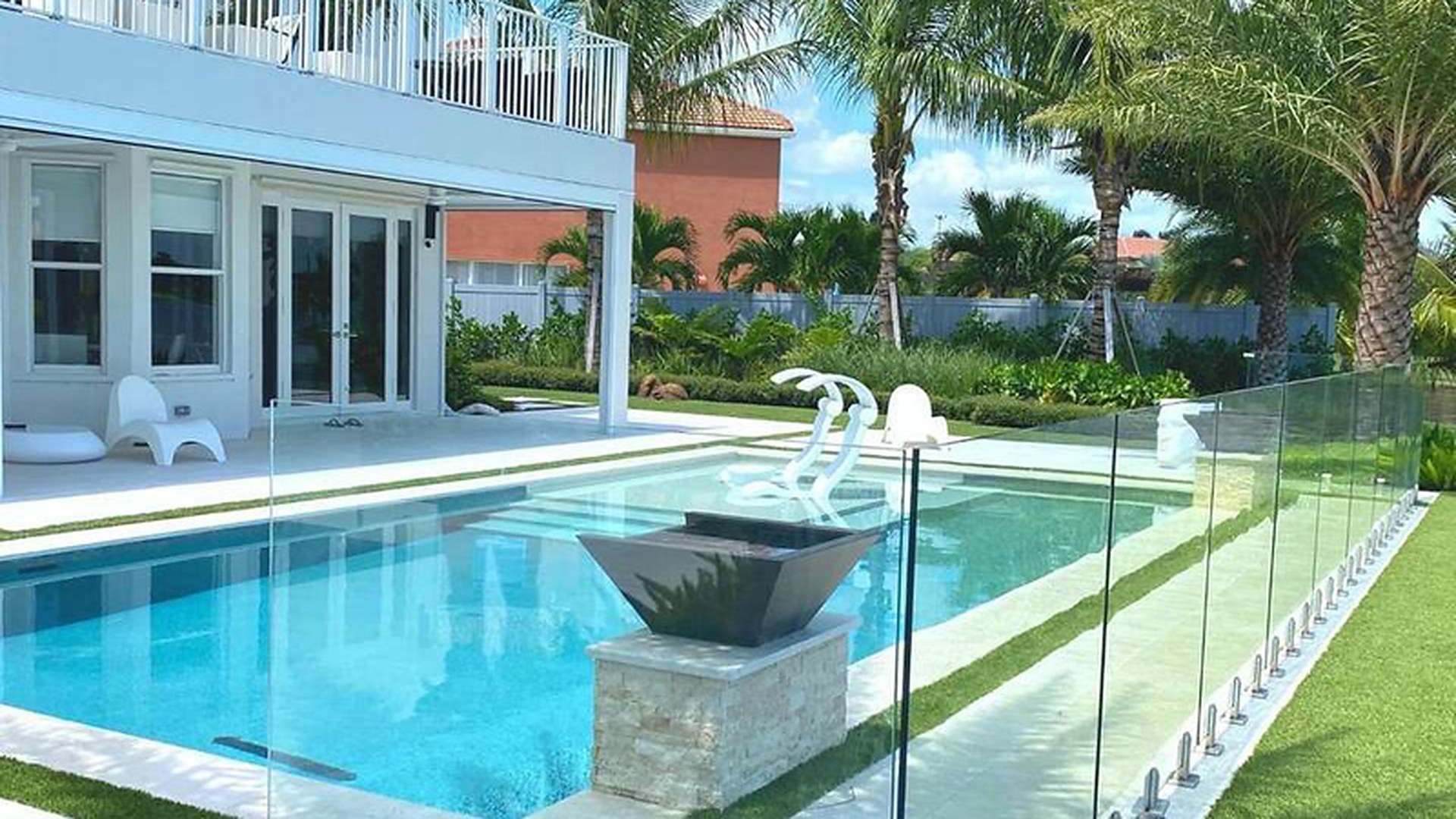
| Spigot | Short post fixed to the slab or deck, gripping the panel at its base | Pool surrounds, decks and timber or paved surfaces where a channel is impractical | Anchor and drainage detail; corrosion at the base; spacing consistency |
| Post and glass | Structural posts carry the load; glass panels span between them as infill | Stairs, ramps and long runs where structural movement must be absorbed | Post base fixing; movement joints; glass no longer carries the line load, so the posts do |
| Semi-frameless with handrail | Frameless panel with a continuous top rail or cap | Public buildings where a graspable top rail is required | The rail-to-glass connection becomes part of the load path; fixing spacing changes |
Match the system to the substrate, then to the sightline
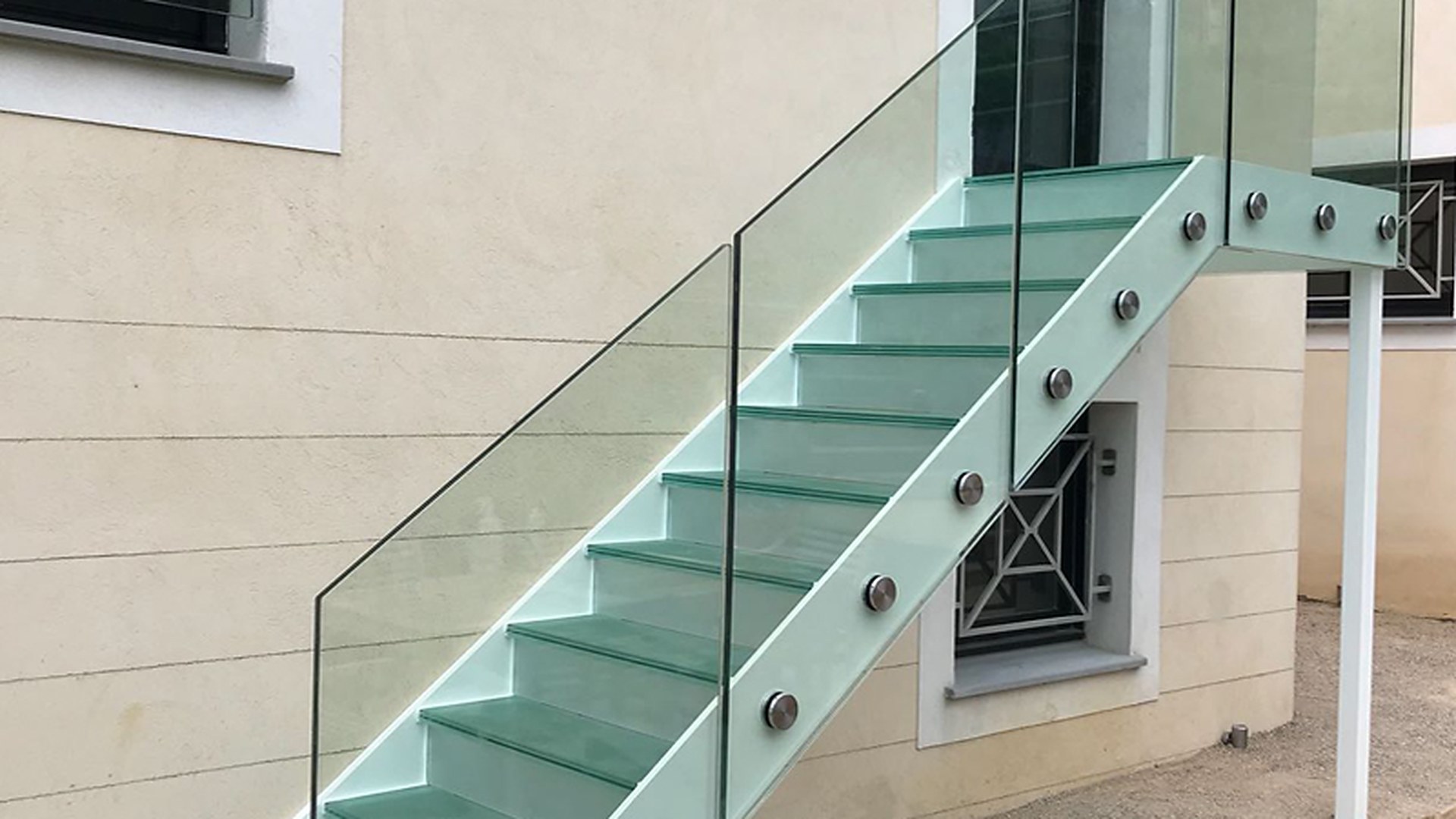
A concrete slab edge with a cast-in or surface-fixed channel is the simplest frameless case, and it is where the shoe profile earns its cost. A steel stringer on a staircase is the opposite: there is no continuous edge to bolt a shoe to, so post systems or side-mounted standoffs take over, and the stringer's own stiffness enters the calculation. A timber or paved deck around a pool usually rules out a channel entirely, which is why the pool side of this range is built around spigot systems such as the glass fencing for pools and the custom pool fencing in toughened and laminated glass. Getting this order wrong is the single most expensive mistake in the package, because it is discovered after the substrate is built.
Where each system usually fails
Channels fail at the slab edge: the shoe is set out of level, the anchors miss the reinforcement, or water sits in the profile and works on the fixing. Standoffs fail at the hole, where edge distance was reduced to make the layout work. Spigots fail at the base plate, where the anchor was chosen for the deck rather than for the load. Post systems fail at the base connection and at the movement joint nobody allowed for. Semi-frameless systems fail at the rail connection, because the rail was treated as a handhold and not as part of the structure. In every case the glass was not the weak link — the interface was.
How to Verify a Glass Balustrade Manufacturer (Ten Questions)
Ten questions separate a supplier who can deliver a commercial guard from one who can deliver panels. Ask them in this order, in writing, before any drawing is issued. They apply to glass balustrade manufacturers in Europe, North America and China alike; what changes between them is the document set, not the questions, and the answers tell you how the company thinks — which matters more than any single reply.
- Which tested or calculated configuration are you quoting, and can I see the document?
- What glass build-up does that configuration assume, and is it what you have quoted me?
- What fixing spacing and edge distance apply, and do they match the drawing?
- What is the substrate in your assumption, and what happens if mine differs?
- Which material grade and finish are specified for the fittings, for my exposure?
- Who manufactures the glass and the fittings, and which operations are in-house?
- Which local approval evidence can the system be supplied with in my market?
- Who signs the inspection report on my order, and what does it cover?
- How is the assembly packed, and how are glass edges protected in transit?
- What is excluded from the quote — anchors, grout, installation, movement joints, drainage?
Three things you can check without the supplier
First, the arithmetic of the fixing layout: count the fixings on the drawing and divide by the run. A layout that changes spacing at a corner without a reason is a layout that was drawn to fit, not calculated. Second, the edge condition: ask for a photograph of the edge finish on a finished panel, because a ground edge and a polished edge look different under light and behave differently in a structural assumption. Third, the paper trail: a commercial supplier can send a test report, a fixing schedule and a packing list before the order; if the answer is that documents follow the goods, the documents do not exist yet.
Samples and the first order
Order one panel and one fixing set before the main order, and inspect the interface rather than the glass. Check that the panel sits in the shoe or spigot without being forced, that the gaskets or grout are the ones specified, that the edge is as described, and that the fittings are marked with the material grade. A single-unit order is the cheapest test available for a commercial package, and it is a fair test of the glass balustrade manufacturer too: a supplier who will not build one panel and one fixing set will not handle a site query well either.
About ROPO Windows
ROPO Windows is a door and window manufacturer based in Fuzhou, Fujian Province, China, with 16 years in the trade and customers in more than 100 countries. The factory builds aluminium and uPVC windows and doors, and the glass railing range — balustrades, pool railings and staircase railings — runs through the same glass sourcing, hardware assembly and export packing operation, which is why a project can order the guard and the facade in one shipment with one colour schedule.
Commercial buyers usually want four things from a factory before they commit, and all four are answered here rather than in a sales call. The first is a warranty: ROPO products carry a 10-year warranty. The second is a minimum order small enough to test: MOQ is one unit, so a sample panel and its fixing set can be bought and inspected before any volume order. The third is certification, and it needs to be stated precisely — our window and door systems are tested to AS2047 and NZS4211 and include Miami-Dade approved impact products, but those approvals attach to the tested window and door assemblies and do not automatically extend to a balustrade; a guard's evidence has to come from its own configuration. The fourth is payment protection: orders can be placed under Trade Assurance.
Where the guard fits in the product range
The range covers the three cases that generate most commercial enquiries: balcony and terrace guards on the balcony and terrace glass balustrades page, stairs on the glass staircase railings page, and pool surrounds on the glass pool railings page. Frameless U-channel assemblies for balconies and stairs are listed as a frameless glass balustrade in aluminium U-channel, and the stair-mounted variant is listed separately as a glass balustrade for stairs. Because the same plant builds windows and doors, a project that needs the guard, the balcony door behind it and the screen on the same elevation can be produced against one schedule.
What a factory-direct order does and does not remove
Buying factory-direct removes a layer of markup and a layer of interpretation between the drawing and the product; it does not remove the engineering. The tested configuration, the substrate and the local approval still have to be resolved, and on an import order the party responsible for installation is still the installer on site. What changes is who you ask: one manufacturer answers for the glass, the fittings, the finish and the packing, and the answers arrive from the people who made the parts. That is the trade, and it suits projects where the buyer has a competent installer and a clear drawing.
Custom Production Process
Every balustrade order starts from a drawing, not from a stock list. The process below is the one used for the windows, doors and guard products built in the Fuzhou factory, and it is deliberately the same for a one-unit sample and for a container.
From drawing to released production
The first step is a drawing review: the panel sizes, the fixing positions, the substrate and the finish are checked against what can actually be built, and anything ambiguous is returned as a question before production is released. Glass is then cut to the released sizes with the edge condition specified, and the fittings are matched to the panel layout rather than to a nominal spacing. Finish is applied to the frames and fittings against the agreed colour schedule, and the assembly is dry-fitted so that the glass-to-fitting interface is proven before packing. Only then does the order enter the inspection sequence.
Five-step quality control
Inspection runs in five stages: incoming material and glass check, dimensional check against the released drawing, assembly and fitting check on the dry fit, finish and hardware check before packing, and a final packing and marking check against the order list. Each stage is recorded against the order, and the record travels with the shipment, so a question raised after arrival can be traced to the stage that handled it. Personnel numbers are not published; what is published is the sequence, because the sequence is what a buyer can audit.
Traceability and the documents in the crate
Panels and fittings are labelled to the order and to their position in the installation, so a site does not have to identify a panel by measuring it. The packing list, the inspection record and the finish schedule are packed with the goods rather than emailed separately, which matters on a project where the receiving party is not the person who placed the order. For commercial work, the drawing set that was released to production is the reference document, and it is the one to compare against what arrives.
Packaging and Shipping
Glass arrives at the site in the condition it left the factory, and a balustrade is harder to pack than a window because the panel has an exposed edge and no frame to protect it. The packing method below is the one used on export orders from Fuzhou, and it is the part of the quotation most often left undescribed.
How a balustrade is packed
Panels are separated by protective interleaving, with the edges protected along their full length, and are stood or crated so that they cannot flex in transit. Fittings, spigots, shoes and anchors are packed separately and labelled to their positions, because a lost spigot stops an installation as effectively as a broken panel. Crates are marked to the receiving site and bundled against moisture, and every bundle carries a printed packing list matched to the order code, so nothing has to be opened to be identified. The frameless glass balustrade factory output is packed to this standard whether the order is one panel or a full container.
Ports, containers and payment protection
Shipments leave from Fuzhou or Xiamen, by full container or as LCL cargo consolidated with other orders, and the route is chosen against the destination port and the project programme rather than by default. Glass is heavy and fragile in the same shipment, so the loading plan matters: crates are positioned and braced for the sea passage, and the container is loaded in an order that lets the site unload the panels it needs first. Orders can be placed under Trade Assurance, which keeps the payment schedule and the delivery terms in one record — useful when the balustrade and the facade are bought together and the programme depends on both arriving as one shipment.
Glass Balustrade Sourcing FAQ and Quote Request
Can I buy a frameless balustrade as a one-off?
Yes. MOQ is one unit, which is how most commercial buyers start: one panel and one fixing set, inspected before the main order.
Do AS2047 or Miami-Dade approvals cover a balustrade?
No. Those approvals attach to specific tested window and door assemblies. A guard needs evidence for its own configuration, and we state that plainly rather than let a facade certificate imply a guard approval.
Which system should I choose for a concrete slab edge?
A base channel or a surface-mounted shoe is usually the cleanest frameless answer, provided the edge is level and the anchors land where the slab can take them. Send the edge detail and the answer becomes specific.
Which system suits a pool surround?
Spigot systems dominate, because a continuous channel is impractical around paving and drainage. The material grade of the fittings matters more than the glass here.
How long does an order take?
It depends on the drawing, the glass build-up and the shipping route, and we quote it against the released drawing rather than as a generic number. The glass railing supplier page lists the product families to reference in the enquiry.
What do you need for a quotation?
Send the plan and elevation with the balustrade line marked, the substrate at the fixing, the height and the run, the glass build-up you require or the performance you need, the finish, the destination port, and whether the order is a sample, an LCL shipment or a container. With those six items the quote is a specification rather than an estimate.
For a project under way, the fastest route is to send the drawing set with the balustrade line highlighted and let us return a fixing schedule and a custom glass balustrade manufacturer quotation against it. If the facade is being bought at the same time, say so in the first message: the two packages are cheaper to coordinate before either is drawn than after both are released.
